Iniquilipi Chiari-Lombardo, co-founder of TV Indígena, describes himself as an Indigenous communicator: “We tell stories, we tell realities, and we make problems visible from our own authentic perspective.”
By Mary Donovan
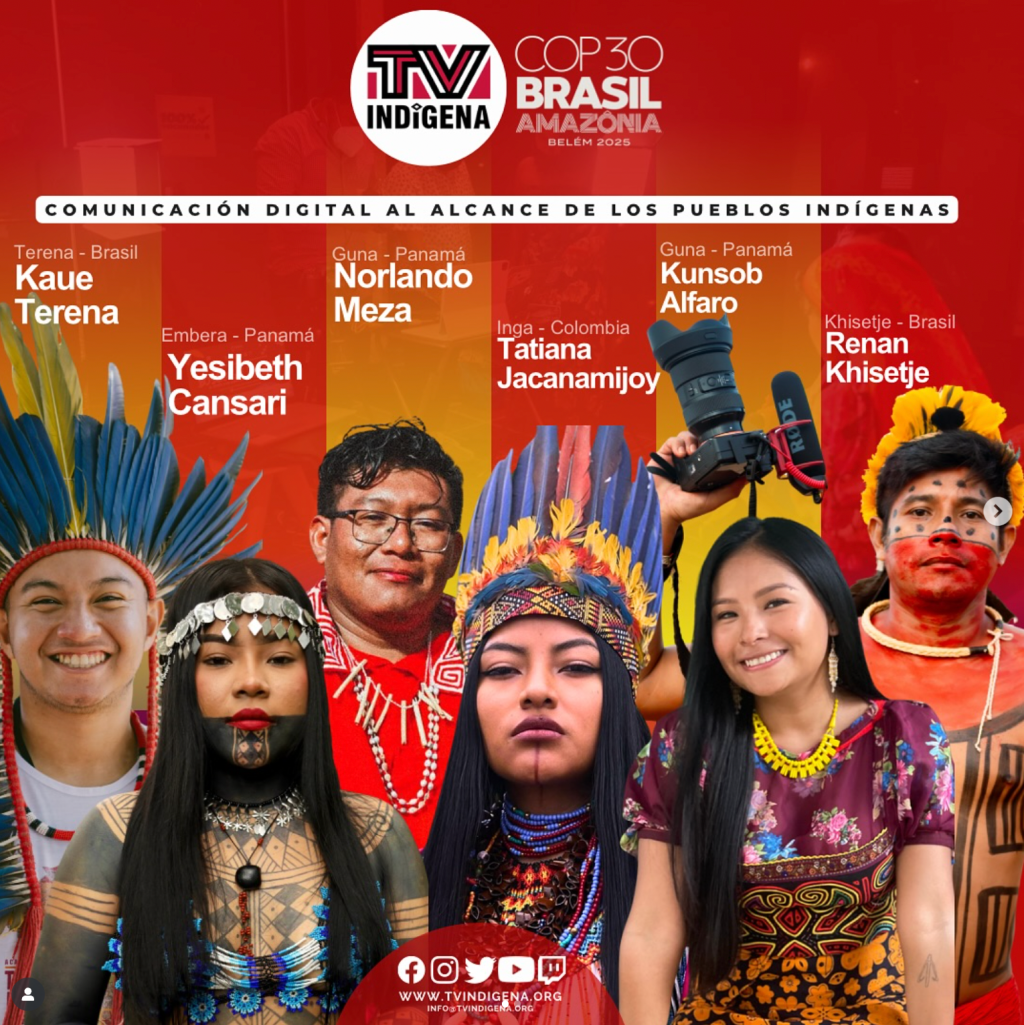
TV Indígena is an Indigenous media channel and a space to raise awareness of Indigenous cultures, sharing videos made by and for the peoples of Abya Yala and beyond.
Chiari-Lombardo co-founded this platform with Giuseppe Olo Villalaz in response to the lack of media spaces where Indigenous Peoples can gain visibility. They both come from Gunayala, an autonomous territory of the Guna Indigenous Peoples spanning an archipelago of over 300 islands on the Caribbean side of Panama and into Colombia.
Gunayala draws tourists from all over the world for its clear waters, remote beaches, and colorful embroidered molas — the handmade textiles created by Guna women — but it also has a rich culture, traditional leadership, and a history of revolution for autonomy.
Chiari-Lombardo and Villalaz saw an opportunity for Indigenous Peoples to tell their own stories, both within their communities and to others who want to learn. TV Indígena is a space for young Indigenous Peoples to reclaim their culture, especially as more are born outside their ancestral territories and are seeking new ways to connect with their language, history, and storytelling traditions.
Over the phone from Panama, Chiari-Lombardo explained in Spanish that Indigenous communication differs from other forms of communication, starting with its approach to knowledge. “Usually, Indigenous Peoples already hold the information; they don’t need to search for it. They reproduce or work on what they want to do in their communication products,” he said. Journalists outside of the community must engage in investigative journalism, asking questions, listening, and analyzing to understand the context.
Chiari-Lombardo also emphasized the importance of context. Traditional journalism, he said, often focuses on isolated events without considering the larger ongoing story, the root causes, and what happens next.
The full story behind the relocation from Gardi Sugdub
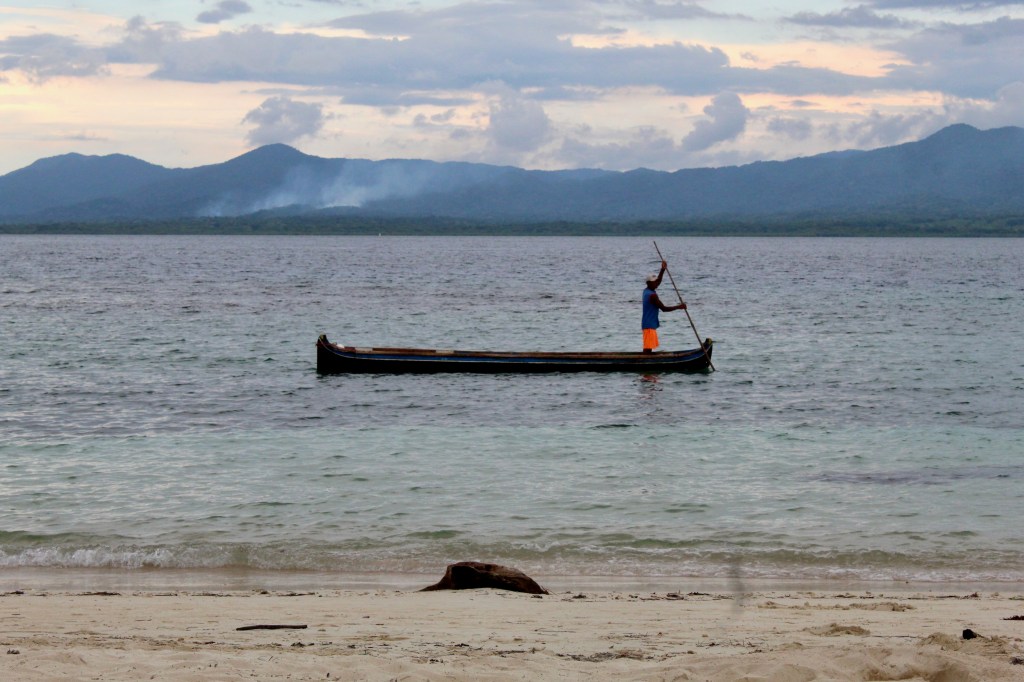
In June 2024, the Guna People living on Gardi Sugdub island — 1,200 meters off the northern Panama coast — had the option to relocate to the mainland due to rising sea levels. 1,000 people decided to leave and move into a government settlement with concrete houses, unlike the island houses made of traditional materials. Approximately 100 people chose to stay.
It was the first community in Panama to be displaced due to climate change, leading to significant international climate coverage.
“The narrative wasn’t 100% true. So, as Indigenous Peoples, we decided to create our own report by interviewing our community’s leaders, women, and young people,” Chiari-Lombardo said.
In truth, the community also relocated because the island had become overcrowded and too small to sustain the growing population. The original reporting also contained factual inaccuracies about the rate of sea level rise.
Chiari-Lombardo stresses the importance of continuing the reporting because few articles discussed what happened after the move; the relocation is just the beginning of the story. How have people adapted to the changes and to living in concrete buildings? The answers would be relevant for the Guna People and anyone globally who is facing relocation due to sea level rise, from New York City to Karachi. But the media had already left.
Where the UN Climate Change Conference (COP 30) begins
TV Indigena is part of the “Yaku Mama (Water Mother) Flotilla” that traveled 3,000 km through rivers in the Amazon to reach COP 30 in Belém, Brazil. Together with the Black and Indigenous Liberation Movement (BILM) and other Indigenous organizations from Panama, Costa Rica, Ecuador, Indonesia, and Brazil, this flotilla is an act of resistance to bring climate solutions and policy demands to the conference.
The flotilla started from the glaciers of Ecuador, which feed into the Amazon River, allowing for the rainforest to thrive. Most of the COP 30 reporting focuses on the forests of Brazil and international negotiations. The flotilla tells the story from the beginning.
Through landscapes and communities in Ecuador, Peru, Colombia, and Brazil, the flotilla highlights pressing environmental and social issues of pollution, extractivism, and threats to Indigenous Peoples living in voluntary isolation. A floating film festival was organized with one of the communities to discuss just transition and sustainable alternatives for local economies.
The flotilla route is similar to the one taken by Spanish conquistador Francisco de Orellana in the 1500s, as a response to colonialism and the ongoing extractive projects.
It also represents solidarity among Indigenous Peoples as a source of strength. Chiari-Lombardo emphasizes the importance of collaboration and sharing experiences to make struggles visible and defend ancestral territories.
TV Indígena reports from COP 30 by highlighting Indigenous leaders and examining Indigenous participation in the conference. While around 3,000 Indigenous Peoples have registered for COP 30, few are involved in the actual climate negotiations.
Yet Chiari-Lombardo says: “The COP does not stop in Brazil.” The impact Indigenous Peoples face as a consequence of colonialism continues, so their story should too.
Recommendations for journalists
What can non-Indigenous journalists learn from TV Indígena? Chiari-Lombardo shares two recommendations.
First, when reporting on Indigenous Peoples, start with the United Nations Declaration on the Rights of Indigenous Peoples. It covers the fundamental concepts of Indigenous self-governance and self-identification, it helps to contextualize how territories differ, and describes work processes that respect Indigenous Peoples’ rights.
Chiari-Lombardo shares an example of how some reports on Gunayala say it is a land without laws, whereas it is a territory with its own laws and justice system, recognized by the government of Panama. Applying the principles of the UN Declaration would identify this misrepresentation.
Secondly, find an ally in the territory you report on who can guide you in engaging with the community, and find the right interpreter.
“Anyone can speak Indigenous languages, but not everyone can interpret,” Chiari-Lombardo says. When a non-Indigenous person speaks one sentence, it may take up to three to five minutes to explain the context. And when an Indigenous leader talks for five minutes, it should be translated correctly into one sentence for the journalist. The right interpreter brings the right perspective and broader information.
The Guna language Dulegaya doesn’t have a word for climate change, although the people increasingly feel the effects of it. They now find ways to discuss it that include their lived experiences and knowledge.
These principles apply to all good journalism — work that is contextual, respectful, and rooted in truth. Indigenous journalism goes a step further because it is not just about visibility. It is an act of resistance, of cultural strengthening, and collective power. Chiari-Lombardo: “We are the protagonists of our own narratives.”
This interview was published in Cracks issue #1


Leave a Reply