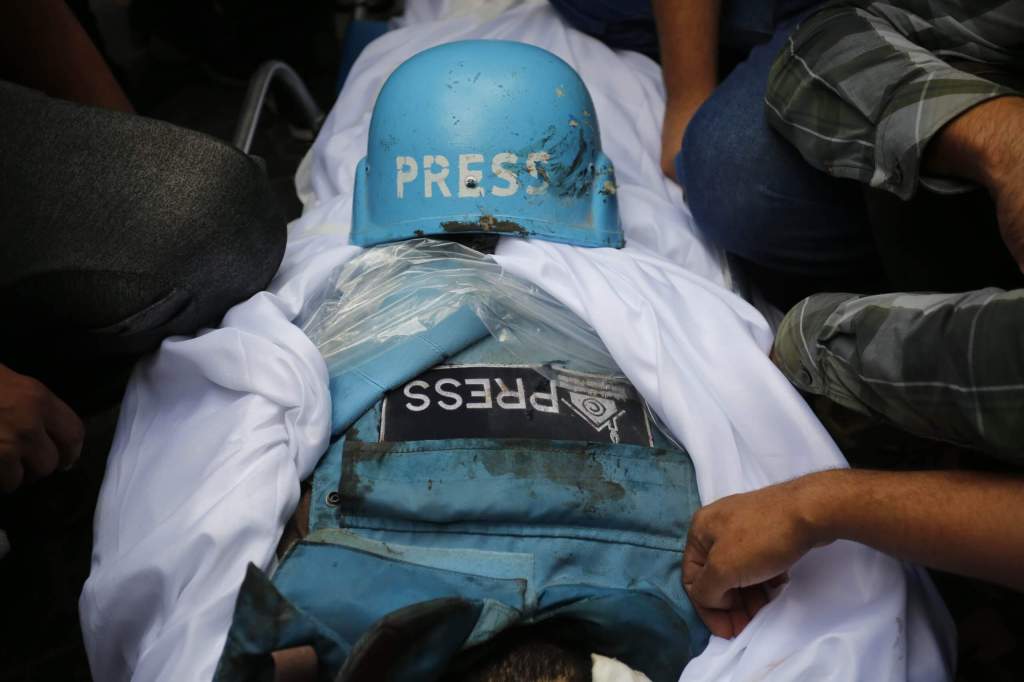
In the reporting on the Israeli genocide in Gaza, global Western mainstream coverage showed its limitations. My forthcoming paper, “Post-2023 Gaza: How Independent Media Complicate the Narrative,” argues that the biased coverage of the genocide is patterned rather than accidental. Legacy routines, what I call official indexing, episodic timelines, and a persistent “view from nowhere”, continue to shape what audiences see and what remains invisible. These routines privilege what is easiest to access and verify, such as government briefings or wire copy, while the voices under blockade or occupation are often left out.
Against that backdrop, a constellation of independent digital- native outlets, including +972 Magazine, Democracy Now!, De Correspondent, Forensic Architecture, and Orient XXI, demonstrates how journalism can make transparancy and positionality the new foundations of trust.
Each does this differently: +972 Magazine investigates the policies and command decisions that shape violence; Democracy Now! maintains long-term continuity beyond news cycles; De Correspondent centers listening and transparency through its member-funded model; Forensic Architecture turns verification into a public method; and Orient XXI builds regional capacity through multilingual collaboration.
When viewed through decolonial and change-centric lenses, these outlets show that accountability is not advocacy but just good journalism.
Credibility is earned when journalism states who we are, where we stand, and how we know what we know.
The paper translates these insights into a practical “practice protocol” for newsroom leaders. It includes operational steps like adding a positionality line in stories, disclosing methods and uncertainties, budgeting for co-authorship with local journalists, maintaining language glossaries to remove euphemisms, and creating community listening infrastructure. The goal is to make fairness auditable through verifiable processes and shared accountability.
Founders and editors set the conditions for slower, more transparent reporting to thrive. Palestinian journalists who are working under extreme constraint are the model of this integrity daily; their methods, not just their testimonies, deserve to guide global journalism.
The paper has been presented at the “International Media and the War on Gaza: Modalities of Discourse and the Clash of Narratives” Conference, Doha, 29–30 November 2025.
Objectivity is often equated with data. Buzzwords like “evidence-based” and “science-backed” are a mainstay in all forms of journalism. While the scientific method is designed to produce unbiased results, the decision which projects get funded and who gets to do the research is far from neutral.
Most science is done in Western countries by Western scientists, constraining what we accept as true to a single worldview. Language barriers remain high, with English-language papers receiving more visibility and being more often cited. Non-native English speakers report being penalised at the peer-review process, a crucial step where the scientific community decides if results are robust enough to be published. Most published science is done by men, with women representing only 5 to 22% of highly cited—and therefore influential—researchers. The pool of accessible and acceptable scientific evidence is distorted towards the white, male, rich, and English-speaking perspective.
Journalists can participate in the movement to decolonize data by paying special attention to the source of their scientific evidence, balancing their argument with non-English publications from different parts of the world, and by including diverse viewpoints in their reporting. The OpenNotebook, a newsroom by and for science journalists, has a helpful and free guide for journalists wanting to track source diversity.
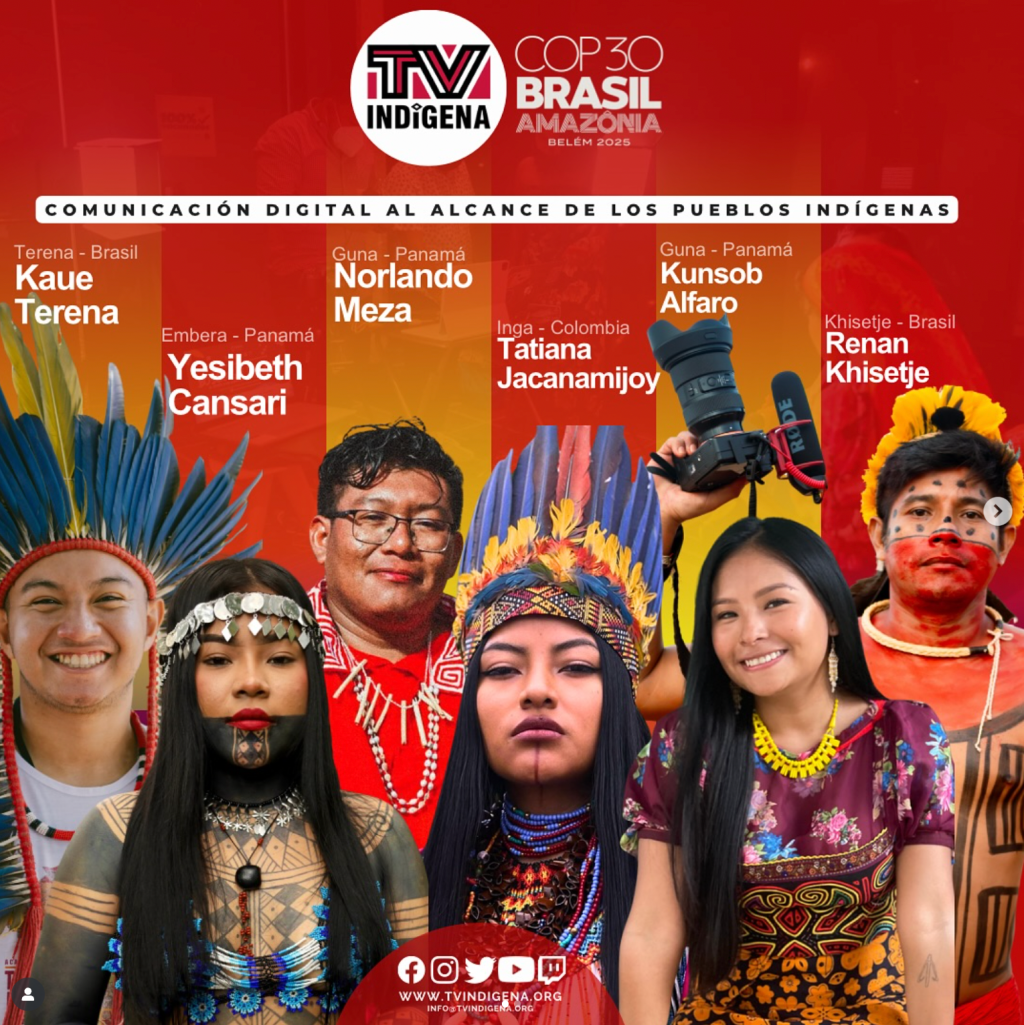
Iniquilipi Chiari-Lombardo, co-founder of TV Indígena, describes himself as an Indigenous communicator: “We tell stories, we tell realities, and we make problems visible from our own authentic perspective.”
By Mary Donovan
TV Indígena is an Indigenous media channel and a space to raise awareness of Indigenous cultures, sharing videos made by and for the peoples of Abya Yala and beyond.
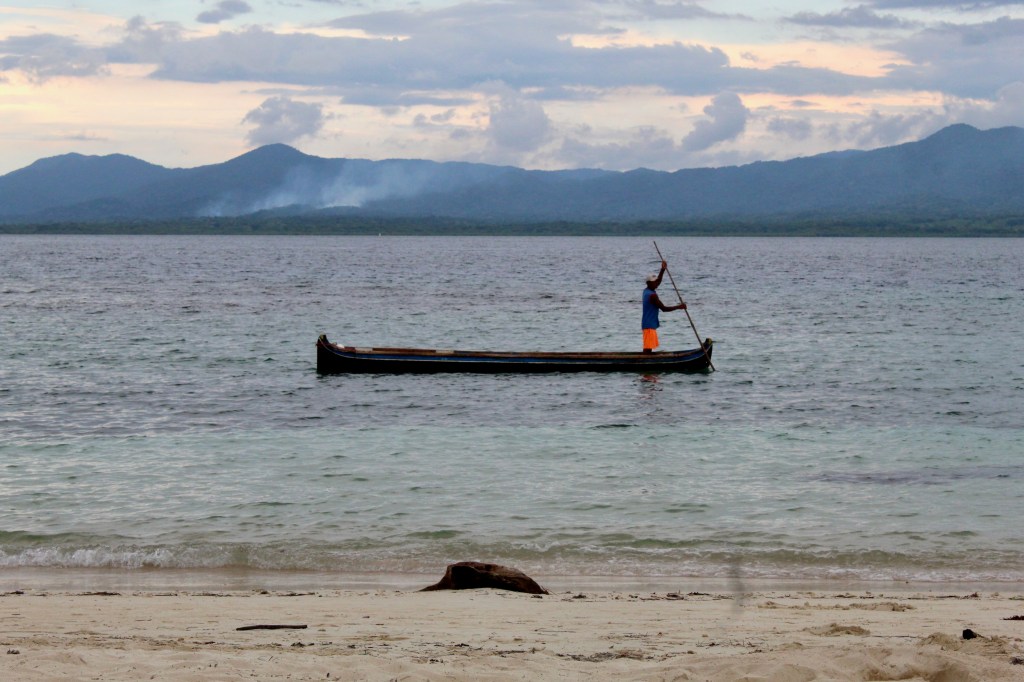
Chiari-Lombardo co-founded this platform with Giuseppe Olo Villalaz in response to the lack of media spaces where Indigenous Peoples can gain visibility. They both come from Gunayala, an autonomous territory of the Guna Indigenous Peoples spanning an archipelago of over 300 islands on the Caribbean side of Panama and into Colombia.
Gunayala draws tourists from all over the world for its clear waters, remote beaches, and colorful embroidered molas — the handmade textiles created by Guna women — but it also has a rich culture, traditional leadership, and a history of revolution for autonomy.
Chiari-Lombardo and Villalaz saw an opportunity for Indigenous Peoples to tell their own stories, both within their communities and to others who want to learn. TV Indígena is a space for young Indigenous Peoples to reclaim their culture, especially as more are born outside their ancestral territories and are seeking new ways to connect with their language, history, and storytelling traditions.
Over the phone from Panama, Chiari-Lombardo explained in Spanish that Indigenous communication differs from other forms of communication, starting with its approach to knowledge. “Usually, Indigenous Peoples already hold the information; they don’t need to search for it. They reproduce or work on what they want to do in their communication products,” he said. Journalists outside of the community must engage in investigative journalism, asking questions, listening, and analyzing to understand the context.
Chiari-Lombardo also emphasized the importance of context. Traditional journalism, he said, often focuses on isolated events without considering the larger ongoing story, the root causes, and what happens next.
The full story behind the relocation from Gardi Sugdub
In June 2024, the Guna People living on Gardi Sugdub island — 1,200 meters off the northern Panama coast — had the option to relocate to the mainland due to rising sea levels. 1,000 people decided to leave and move into a government settlement with concrete houses, unlike the island houses made of traditional materials. Approximately 100 people chose to stay.
It was the first community in Panama to be displaced due to climate change, leading to significant international climate coverage.
“The narrative wasn’t 100% true. So, as Indigenous Peoples, we decided to create our own report by interviewing our community’s leaders, women, and young people,” Chiari-Lombardo said.
In truth, the community also relocated because the island had become overcrowded and too small to sustain the growing population. The original reporting also contained factual inaccuracies about the rate of sea level rise.
Chiari-Lombardo stresses the importance of continuing the reporting because few articles discussed what happened after the move; the relocation is just the beginning of the story. How have people adapted to the changes and to living in concrete buildings? The answers would be relevant for the Guna People and anyone globally who is facing relocation due to sea level rise, from New York City to Karachi. But the media had already left.
Where the UN Climate Change Conference (COP 30) begins
TV Indigena is part of the “Yaku Mama (Water Mother) Flotilla” that traveled 3,000 km through rivers in the Amazon to reach COP 30 in Belém, Brazil. Together with the Black and Indigenous Liberation Movement (BILM) and other Indigenous organizations from Panama, Costa Rica, Ecuador, Indonesia, and Brazil, this flotilla is an act of resistance to bring climate solutions and policy demands to the conference.
The flotilla started from the glaciers of Ecuador, which feed into the Amazon River, allowing for the rainforest to thrive. Most of the COP 30 reporting focuses on the forests of Brazil and international negotiations. The flotilla tells the story from the beginning.
Through landscapes and communities in Ecuador, Peru, Colombia, and Brazil, the flotilla highlights pressing environmental and social issues of pollution, extractivism, and threats to Indigenous Peoples living in voluntary isolation. A floating film festival was organized with one of the communities to discuss just transition and sustainable alternatives for local economies.
The flotilla route is similar to the one taken by Spanish conquistador Francisco de Orellana in the 1500s, as a response to colonialism and the ongoing extractive projects.
It also represents solidarity among Indigenous Peoples as a source of strength. Chiari-Lombardo emphasizes the importance of collaboration and sharing experiences to make struggles visible and defend ancestral territories.
TV Indígena reports from COP 30 by highlighting Indigenous leaders and examining Indigenous participation in the conference. While around 3,000 Indigenous Peoples have registered for COP 30, few are involved in the actual climate negotiations.
Yet Chiari-Lombardo says: “The COP does not stop in Brazil.” The impact Indigenous Peoples face as a consequence of colonialism continues, so their story should too.
Recommendations for journalists
What can non-Indigenous journalists learn from TV Indígena? Chiari-Lombardo shares two recommendations.
First, when reporting on Indigenous Peoples, start with the United Nations Declaration on the Rights of Indigenous Peoples. It covers the fundamental concepts of Indigenous self-governance and self-identification, it helps to contextualize how territories differ, and describes work processes that respect Indigenous Peoples’ rights.
Chiari-Lombardo shares an example of how some reports on Gunayala say it is a land without laws, whereas it is a territory with its own laws and justice system, recognized by the government of Panama. Applying the principles of the UN Declaration would identify this misrepresentation.
Secondly, find an ally in the territory you report on who can guide you in engaging with the community, and find the right interpreter.
“Anyone can speak Indigenous languages, but not everyone can interpret,” Chiari-Lombardo says. When a non-Indigenous person speaks one sentence, it may take up to three to five minutes to explain the context. And when an Indigenous leader talks for five minutes, it should be translated correctly into one sentence for the journalist. The right interpreter brings the right perspective and broader information.
The Guna language Dulegaya doesn’t have a word for climate change, although the people increasingly feel the effects of it. They now find ways to discuss it that include their lived experiences and knowledge.
These principles apply to all good journalism — work that is contextual, respectful, and rooted in truth. Indigenous journalism goes a step further because it is not just about visibility. It is an act of resistance, of cultural strengthening, and collective power. Chiari-Lombardo: “We are the protagonists of our own narratives.”
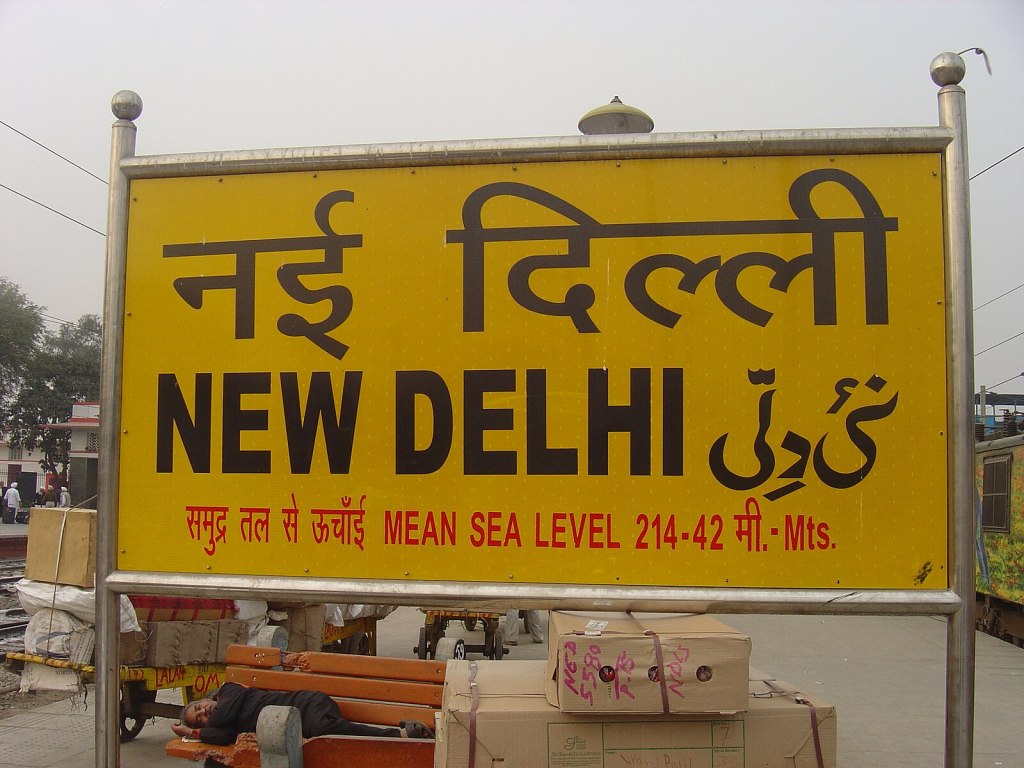
News reports from India in English will often have the speaker quoted talking in English, even though the language they spoke in was different. There are 22 languages in India listed in the constitution, with many hundreds of unlisted dialects, some of which don’t have scripts. It is likely that a bomb blast survivor in Delhi will speak Hindi, and a road accident survivor in Andhra Pradesh will speak Telugu.
Publications now try and quote the person in the original language in a line or two, to establish what language the person spoke and also because some phrases or concepts are best described in the words of the land.
India has of course accepted (some may say embraced) English as its own, and few publications hold on to British English. Indianisms like ‘take a bath’, ‘give an exam’, or ‘in winters’ are the norm, as more speakers whose language at home may be Bengali, Tamil, or any of the others, come into the workforce.
Reporters, especially those working out of smaller cities and towns, usually think in their mother tongue or the local language they grew up with. When they write, they’re translating in their heads. An oft-made mistake is to say someone sat ‘on the table’ rather than ‘at the table’. So in an Indian newsroom, ‘the desk’ is important.
There are certain concepts in India like caste, which require special treatment. For instance, many publications write Dalit-Bahujan-Adivasi (people traditionally considered untouchables, those discriminated against, tribal) in the same way the Associated Press style guide treats Black, with a capital at the beginning.
As right-wing forces surge, there is a tendency for publications to prefix a Hindu god’s name with Lord, which wasn’t the case a generation ago. Similarly, humans venerated to god-like levels also get special treatment. Like the king Shivaji, who lived in the 17th century and is now reclaimed as a Hindu warrior. He is no longer just Shivaji, but Chhatrapati Shivaji Maharaj (chhatrapati translates to lord of the umbrella or sovereign protector; maharaj is king). His followers insist he be referred to this way, and media houses acquiesce , so they are not ‘outraged’ if he’s just called Shivaji.
Andreas Harsono’s three-decade odyssey reveals a land of systemic racism, silenced histories, and a struggle for identity.
By Akhlis Purnomo
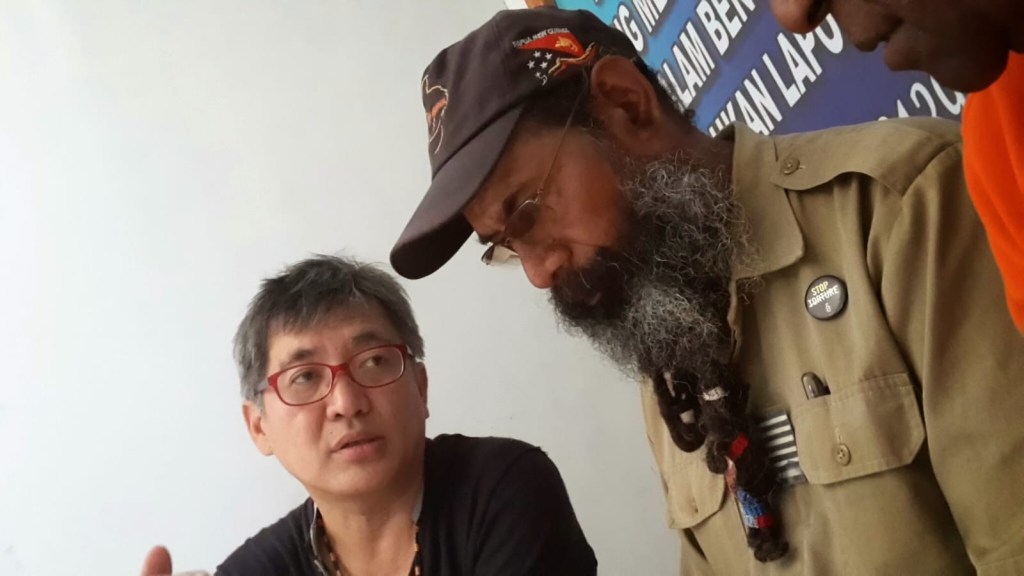
LEBAK, INDONESIA – The story of West Papua is, for most Indonesians, a story they have never truly been told. Journalist and human rights activist Andreas Harsono unravelled his story and journey of reporting West Papua as he sat down with Cracks on the first Sunday morning (11/2) of November 2025 at the comfort of Compok Cellep, his uniquely designed suburban home in Lebak Regency, Banten Province, Indonesia.
“I was growing up in an era where we rarely knew what happened in Papua,” Harsono recalled. Born in 1965, the year Indonesia’s military regime solidified its power and the controversial New York Agreement laid the groundwork for West Papua’s future, his childhood was steeped in a single, unchallenged narrative: that West Papua had willingly chosen to integrate with Indonesia. “We were just being told that Irian Barat (now West Papua) had agreed to 100% integrate with Indonesia. There was a massacre in 1977, but there was no news report at all. The military controlled the media tightly.”
The facade first cracked in 1996, when Harsono worked as a reporter for Associated Press Television and was dispatched to Wamena to cover the kidnapping of 16 international biologists by the Free Papua Movement (Organisasi Papua Merdeka or OPM). As an Indonesian citizen, he could travel where foreign correspondents were barred. For three weeks, he witnessed the tense negotiations led by Colonel Prabowo Subianto’s Kopassus forces. Subianto himself is now the president of the Republic of Indonesia.
“I got malaria, too,” he said with a wry smile. “It was the first time I realised that there was something wrong in West Papua.” He saw a reality starkly different from the placid portrayal in Jakarta’s newspapers: widespread human rights abuses and pervasive racism against dark-skinned, curly-haired Papuans. “That was when I started to question my own understanding.”
That initial questioning ignited a lifelong commitment. From 2008 to 2018, Harsono returned to West Papua every year; his journeys culminating in seminal reports for Human Rights Watch on political prisoners, media blackouts, and, most recently, the deep-seated racism that underpins the conflict. His work, Something to Hide (2015), is not just a chronicle of oppression, but a personal reckoning with his Javanese-Indonesian identity.
The Four Pillars of a Forgotten Conflict
Ask Harsono to diagnose the crisis, and he turns not to polemics, but to the sober analysis of Indonesia’s state-owned National Research and Innovation Agency (Badan Riset dan Inovasi Nasional, BRIN). He outlined the four root causes they identified.
First, and most fundamentally, is the manipulated history of integration. Harsono points to founding father Mohammad Hatta’s early reluctance to include West Papua, citing cultural differences, and the deeply flawed 1969 “Act of Free Choice” where just over 1,000 hand-picked West Papuans, under intense military pressure, voted unanimously for integration. “The history of how West Papua became a part of Indonesia was manipulated,” Harsono stated.
Second are the systemic human rights abuses. The names of the victims punctuate his sentences like grim milestones: Theys Eluay, a prominent West Papua independence leader, assassinated by the Indonesian Army Special Forces (Kopassus); his driver, Aristoteles Masoka, disappeared; Filep Karma, another pro-independence leader who became a close friend, was imprisoned for raising the banned Morning Star flag. “I get reports and videos every day about human rights abuses from the ground,” Harsono said.
Third is environmental degradation, where the lush Papuan rainforests are being devoured by palm oil and mining conglomerates. “Freeport was the beginning in 1969,” he noted, referring to the massive American-owned gold and copper mine. “The environment and wildlife are destroyed, and millions of hectares of land are being stolen from the indigenous West Papuans.”
The fourth is deliberate marginalization. He cites Filep Karma’s book, Seakan Kitorang Setengah Binatang (“As If We Were Animals”), which describes how, in the 1960s, West Papuans owned over 90% of businesses on the capital Jayapura’s main street. Today, many have been pushed to the economic fringe, selling betel nuts on plastic mats. “OPM are systematically implemented,” Harsono explained. “Middle-class, intellectual business owners were accused of sympathizing with the Free Papuan Movement; they were arrested, tortured, and their stores were handed to military-linked businesses.”
The Complicit and the Courageous: Journalism in the Crossfire
Navigating this complex and dangerous terrain requires a careful understanding of the media ecosystem itself. Harsono drew a stark distinction between the Suharto-era’s outright propaganda and the more nuanced, yet still troubled, contemporary landscape.
While independent media outlets like Project Multatuli, Tirto, and Mongabay have produced commendable work about West Papua, a more disturbing phenomenon persists: the infiltration of newsrooms by state intelligence. A leaked military document once revealed over 200 journalists doubling as informants, he said. He wrote in length about the leaked document on Indonesia: Military Documents Reveal Unlawful Spying in Papua (2011).
“They were divided into two positions,” Harsono explained. “The agents were the full-time intelligence officers pretending to be journalists.” He recounted the case of Victor Mambor, the editor of West Papuan media Jubi.id, who discovered that one of his staff members was a police officer secretly sending daily editorial minutes to his superiors via Facebook Messenger. In another case, an army soldier was found working undercover in a Manokwari Express newsroom.
Then there are the informers: real journalists who freelance as informers, and are compensated with money or favors, creating a pervasive culture of surveillance and self-censorship. This dynamic often falls along racial lines, between what Papuans call “wartawan rambut lurus” (straight-haired journalists) and “wartawan rambut keriting” (curly-haired journalists).
“They’re missing the facts on the ground in their narratives,” Harsono said of the complicit media.
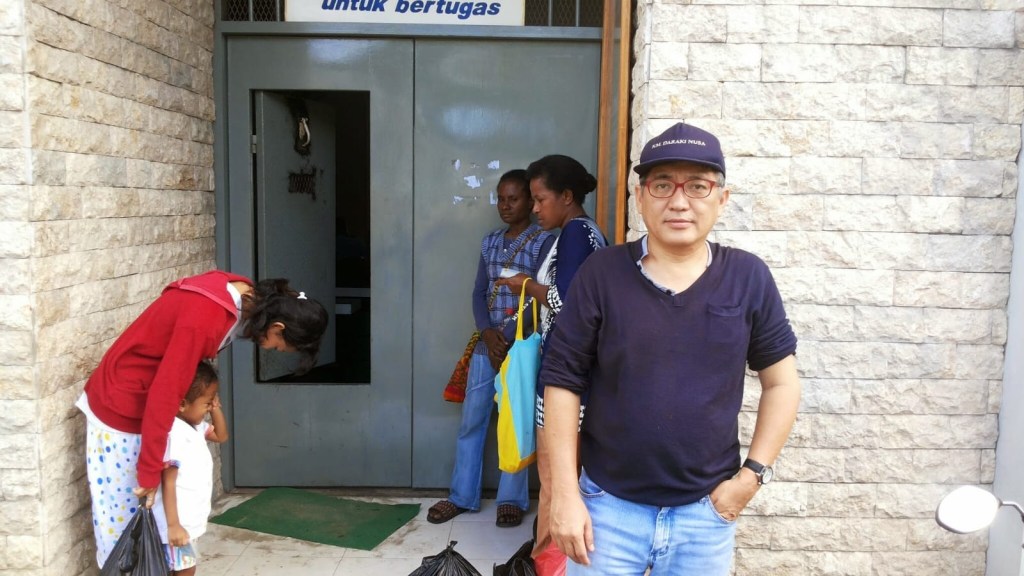
Andreas Harsono visited the Abepura Correctional Facility in 2014. (Photo credit: Andreas Harsono)
The Language of Liberation and Control
In this contested space, even terminology is a battlefield. Harsono navigates it with deliberate precision. He prefers “Indonesian Papua” in English to clarify the region’s current political status, while acknowledging that many Papuans reject the term. He insists on “orang asli Papua” (indigenous Papuan) to distinguish from non-native settlers who call themselves “orang Papua.”
He is particularly critical of the official label “Kelompok Kriminal Bersenjata” (KKB) or “Armed Criminal Groups” for Papuan militants. “I usually use the term ‘West Papuan militants,’” he said, noting they call themselves the West Papua National Liberation Army (TPNPB). He contextualized their struggle: “They are mostly village guardians who just want to be independent from Indonesia. All of them are upset with the destruction of their forest, their rivers, their waters.”
He clarified that the enmity is not towards all Indonesians, but primarily towards the security forces and those they referred to as “suanggi” – a Biaknese term for a traitor or sorcerer, now used to describe Javanese or Papuan informants and infiltrators.
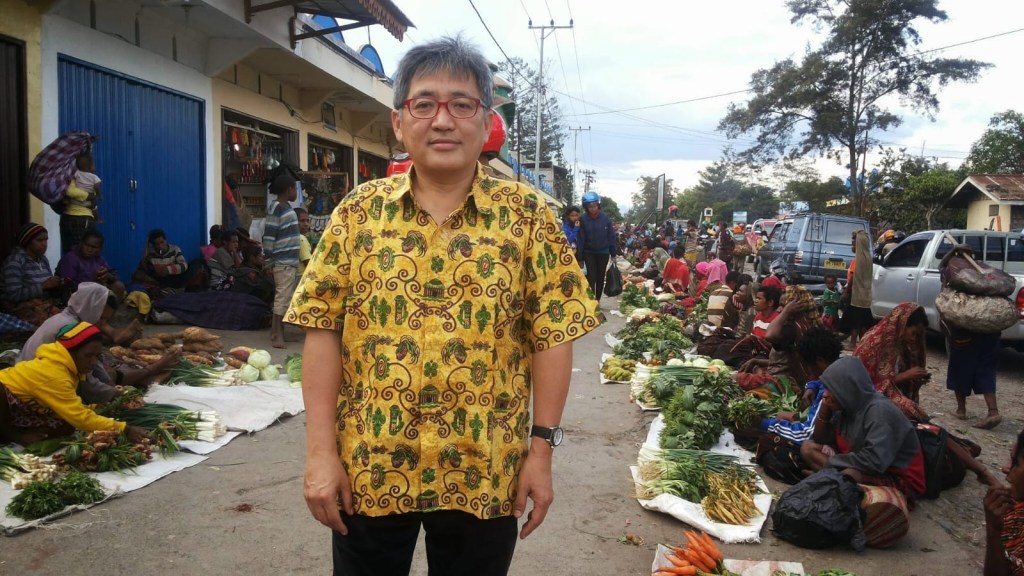
Andreas Harsono interviewed a number of local women selling produce and herbs in Wamena in November 2014. These West Papuan women said they had no access to bank loans. Permanent kiosks are now owned by non-West Papuan people. (Photo credit: Andreas Harsono)
A Vision of Solidarity, Not Solutions
When asked to envision a decolonized future for West Papua, Harsono became cautious. “I do not oppose the rights to self-determination. I respect Papuans who air their political aspiration to be independent,” he said. “But I also do not support them. Because I know it is a very sensitive issue in Indonesia.”
His position is not one of political advocacy for independence, but of human rights advocacy and profound personal solidarity. He believes the core issue Indonesians must confront is their own deep-seated racism. “Indonesians, sadly to say, are racist towards dark-skinned and curly-haired people. They often look down on them, saying they are stupid and smelly. They call West Papuans ‘monyet’ (monkeys).”
This is why Filep Karma’s book title, *As If We Were Animals*, resonates so deeply. It names the dehumanization at the heart of the conflict. For Harsono, solidarity in storytelling means approaching West Papua with an open mind, setting aside the biases of his Javanese, Muslim-majority upbringing to truly listen.
His connection to the land is also cultural and aesthetic. He spoke with passion of Papuan reggae music, the powerful compilation album of Arnold Ap, the classic folk song “Hai Tanahku Papua,” [‘Oh My Land Papua], and the breathtaking woodcraft of the ethnic Asmat people.
For three decades, Andreas Harsono has worked not as a revolutionary, but as a reporter and a witness, meticulously documenting the cracks in Indonesia’s official narrative, one report, one journey, one friendship at a time. His work encouraged us to think that before any problem can be solved, it must first be seen and named for what it truly is.
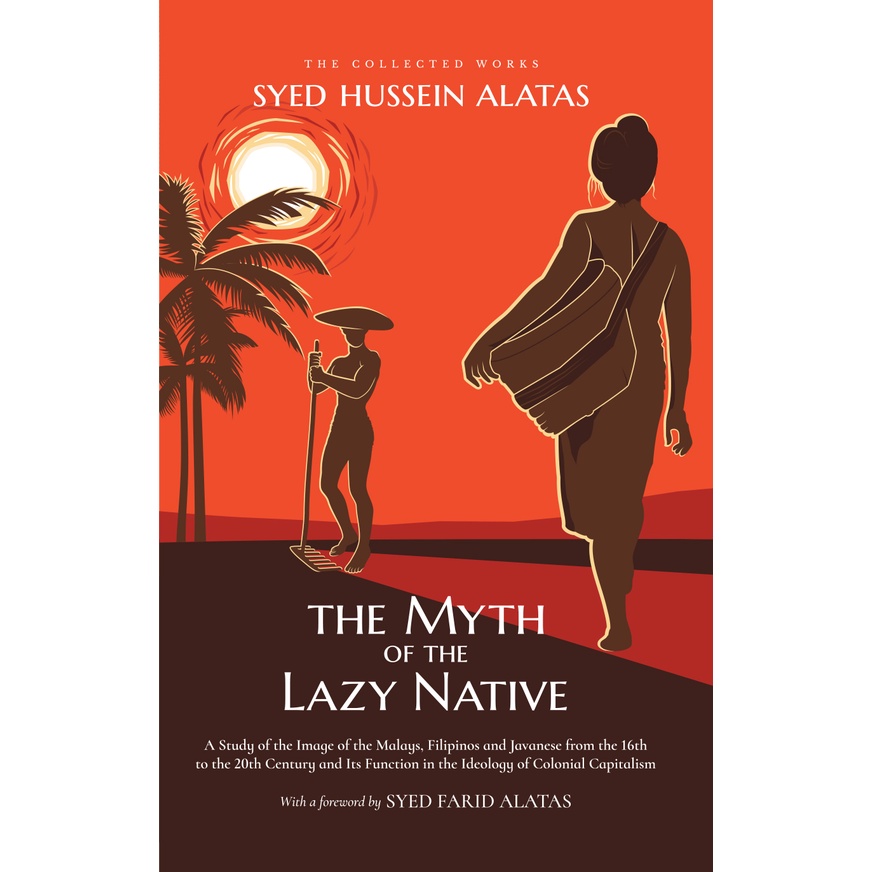
Book review: The Myth of the Lazy Native by Syed Hussein Alatas
By Priya Kulasagaran
What does it actually mean to be lazy, and who decides what ambitions are worth pursuing? In The Myth of the Lazy Native, sociologist and academic Syed Hussein Alatas argues that in the eyes of the colonizer, laziness simply meant rejecting exploitation.
Dissecting colonial writings by administrators, scholars, and travelers, Alatas shows how colonial capitalism moralized labor along racial lines across colonies in Southeast Asia. From this perspective, the values of entire communities were measured solely by their usefulness to the empire.
For instance, in colonial Malaysia, Malay rice farmers, fishermen, and smallholders were dismissed as “indolent” for working on their own terms, supposedly unambitious due to their disinterest in colonial enterprises.
However, what counted as diligence was still deeply steeped in contempt. Here is one colonial observer’s “praise” for Chinese laborers, who were often debt-bonded and endured cruel conditions within colonial plantations and mines:
He is the mule among nations—capable of the hardest task under the most trying conditions; tolerant of every kind of weather and ill usage; eating little and drinking less; stubborn and callous; unlovable and useful in the highest degree.
Lazy or not, all were deemed subhuman by colonial masters who avoided manual labor themselves.
What feels most urgent to me as a Malaysian is the book’s exploration of how these myths were internalized by the colonized and adopted by the local elite to shape political and policy narratives. I still see Alatas’ critique reflected in how Malaysians perceive one another, with the same tired stereotypes coloring inter-ethnic assumptions of laziness and entitlement. The same pattern also shapes who we label as “expatriate” versus “migrant worker”. Perceptions of race still play a role in determining whose labor is valued, tolerated, or rendered disposable.
Rolando Vazquez Melken was a guest speaker in the fifth Writing for Transformation course and answered questions from participants about decolonial theory in the context of storytelling and journalism. He is Professor of Post/Decolonial Theories and Literatures, with a focus on the Global South at the Faculty of Humanities of the University of Amsterdam in the Netherlands.Rolando’s words are carried by me, Sanne Breimer. I have tried to listen carefully, and the following excerpts are based on my notes from the session.
How to apply the theory to professions outside of academia? A first thing to do, Rolando says, would be to locate the institution you’re working for geohistorically, along the lines of colonial history. Once you do that, you will see that its position isn’t neutral.
Rolando:
“In the structure of a university, for example, the colonial hierarchy with its dominant positionality in colonial order is reproduced. The people in the highest positions in Dutch universities are white and from a high class, and you will find the triangle of discrimination when you see the people doing the cooking and the cleaning.”
We need to begin with positioning ourselves and not replicate the same system we are fighting against; that consciousness is fundamental. The work of Catherine Walsh and Arturo Escobar about centering the question of “Who?” is recommended:
Who is doing the work?
For whom are you doing that work?
With whom are you doing that work?
Once you apply these questions to journalism, you start to see that journalism shouldn’t be about people but with people. As a journalist, you should ask yourself what grants you the privilege to carry the voices of other people, and how is your story giving back to the community and not being extractive?
It’s about dignity, too. Decolonial theory is an ethical and political project; if you’re not working towards justice, you’re not doing decoloniality, Rolando emphasizes.
Even if you think your work is decolonial, it can still reinforce privilege and extraction, for example, in the context of art, when Western institutions exhibit work from the majority world for a predominantly white audience. You could apply this to journalism, too. Some of the organizations that do the real decolonial work don’t mention the word decolonial.
The role of the editor
The editor guarantees eligibility and formats. Academic texts are also for dissemination, and editors often edit out certain words that aren’t “normal” English. Decolonial academics push terms that the English language doesn’t know yet:
Decoloniality vs decolonization. The term decoloniality isn’t just about decolonization; it’s a much broader concept (explained in a previous newsletter)
Knowledges vs knowledge. Decolonial academics speak about the plural because they believe there isn’t such a thing as one dominant knowledge; there are several knowledges existing next to each other.
Earthlessness and worldlessness as new words, expressing the loss of earth and worlds by colonial erasure.
Professor Vazquez Melken mentions how decolonial writers like Maria Lugones and Gloria Wekker had difficulties sharing their work because of the dominant language that doesn’t incorporate the nuances they were talking about. He talks about the concept of “coming to voice” as a decolonial process of undoing erasure. Colonialism has caused suppression and erasure of many other knowledges by implementing one dominant culture and knowledge.
Storytellers have a task of listening to bring back the cultural archives that have been silenced. Instead of doing research, which in its traditional form is also extraction, journalists should listen. If you listen, you are receiving, not representing.
From byline to carryline
As journalists, we don’t own the stories; we don’t become the author. When you listen, you receive and carry the story further. Decolonial storytelling is about challenging the dominant narrative and carrying critical perspectives without erasing the edges of storytelling. It’s about a critique of ecocide and eurocentrism, and implementing notions of ancestrality that the dominant narrative doesn’t recognize as truthful.
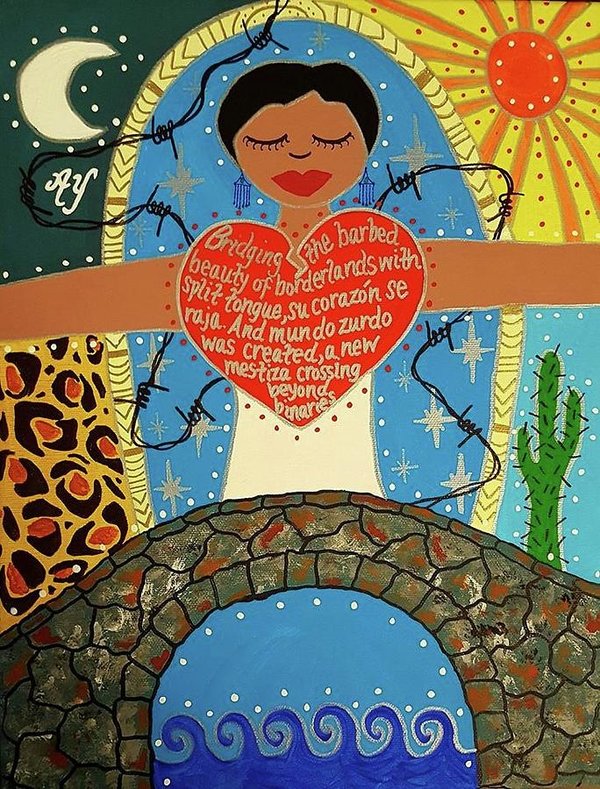
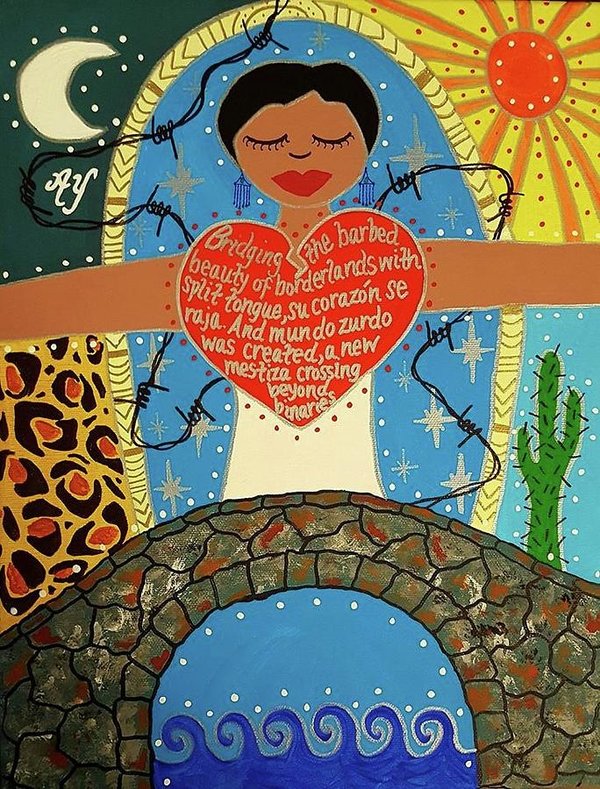
Storytellers can protect these narratives by receiving them and not dismissing them as inferior or exotic. Rolando points out that it’s a challenge and a long struggle to do so. How to listen to indigenous epistemologies that are not in text but in textiles and storytelling, for example? It means to challenge the validation of dominant structures, with English grammar that often erases characteristics. He mentions the essay How to Tame a Wild Tongue by Gloria Anzaldua. A short excerpt:
“So, if you want to really hurt me, talk badly about my language.
Ethnic identity is twin skin to linguistic identity – I am my language. Until I can take pride in my language, I cannot take pride in myself. Until I can accept as legitimate Chicano Texas Spanish, Tex-Mex, and all the other languages I speak, I cannot accept the legitimacy of myself. Until I am free to write bilingually and to switch codes without having always to translate, while I still have to speak English or Spanish when I would rather speak Spanglish, and as long as I have to accommodate the English speakers rather than having them accommodate me, my tongue will be illegitimate.
I will no longer be made to feel ashamed of existing. I will have my voice: Indian, Spanish, white. I will have my serpent’s tongue – my woman’s voice, my sexual voice, my poet’s voice. I will overcome the tradition of silence.”
Anzaldua writes in Chicano English, a dialect of American English spoken primarily by Mexican Americans (sometimes known as Chicanos), which enables her to think differently, Rolando explains. He says that no author from the center, from New York, Paris, or Germany can think what she is thinking. We need to listen to the voices of those who have been dismissed and dignify them.
From representation to reception
The privileged position is a narrow place, and to be in relation with others means humbling yourself. Native English speakers, for example, don’t assume a position of dominance but also don’t realize that non-native speakers have lost their ancestral or mother tongues and seek ways to express themselves through English. It’s an imperial language, but it also depends on how we use it. It makes you think about the grammar rules we apply rigorously, right? What if we shifted grammars and appreciated the space where mother tongues come through?
At the same time, in the context of the Netherlands, where the far-right leaning government wants to impose the Dutch language in universities, the English language becomes the space where interculturality happens and other archives can come into conversation.
The function of decolonial journalism is not extraction but giving voice and taking the knowledge of people seriously, acknowledging that people have knowledge. You don’t need to add your voice to explain the story; you just need to listen. People know their own situation best, any group of women in any community will know already what is happening, so why not take them as sources of knowledge instead of writing about their experiences?
Rolando makes an interesting point about the paradigm of representation, which is colonial, too. Instead of the power of narrating a story, we should move from representation to reception, and to do that is to learn how to listen. As a storyteller, you have the capacity to receive the lives of others and transmit them. You don’t create a narrative, you’re not representing others. Instead, it’s a process of honouring what others tell you and listening to what has been erased.
From one to multiple journalisms
One of the tasks of decoloniality is to humble yourself. Once you do that, you don’t want to take over anymore; you become “us” instead of “I,” and you will enable pluriformity to flourish. In storytelling, it means to let different realities and different truths exist next to each other. Instead of replicating the dominant narratives created by power and algorithm, you can use the dominant tools to ask yourself who you are honouring, who you are writing for, and what your stories mean to the people you write for.
These small questions, Rolando says, are the most powerful. If you’re a science journalist, for example, implementing decolonial theory in your work is not about questioning science that says two plus two equals four; it’s about the fact that global science isn’t geared towards healing the earth, it’s geared towards capitalism. The practice of decolonial journalism in this context is about the financing of science and the interest behind it, and the fact that it’s white patriarchal science.
You will start to see the modern colonial structure of science as supporting extraction. The more you heal the earth, the more human you are. The same applies to health: what is health, what is the idea of health, and when did the body emerge as a machine? When did we start being repaired or segmented? For some people, this approach to the body as an apparatus is violent and conflicting with their culture and beliefs. It’s not just about access to health services; it’s also about the notion of bodies and healing. Questions like that are fundamental to ask yourself when practicing decolonial journalism.