By Sanne Breimer
What motivates a Balinese man to study the only ancient lontar, palm-leaf manuscript that focuses on the role of women in society? I Wayan Juliana is a Balinese scholar who wrote his PhD thesis on Stri Sasana; Stri is the Javanese word for woman or wife, and Sasana means rules and guidance. Juliana’s general interest in manuscripts, as intellectual records of the past, led him to study Stri Sasana—one of the few Balinese language texts about women.
Where the Javanese wrote a lot about women, mostly in the context of palace life and kings, Balinese lontars focus more on different aspects of ordinary life, from spiritual topics to administrative ones, like how to conduct financial transactions between two people.
At first, Juliana thought that the Stri Sasana was about how to be a good woman. The first half of the text has information about how women can take care of themselves. It is about balancing life, caring for the body and face, and finding a good day to do a beauty treatment. For self-care to refill the inner beauty, it has to be based on the Balinese calendar, which combines a lunar calendar with complex astrological and agricultural cycles.
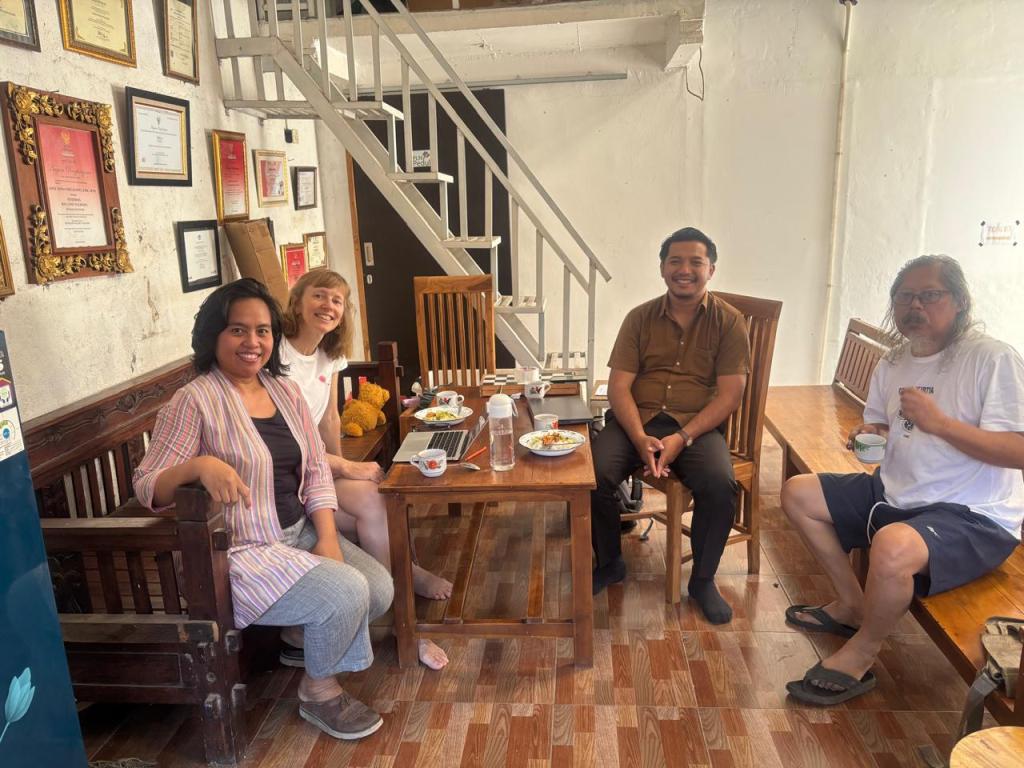
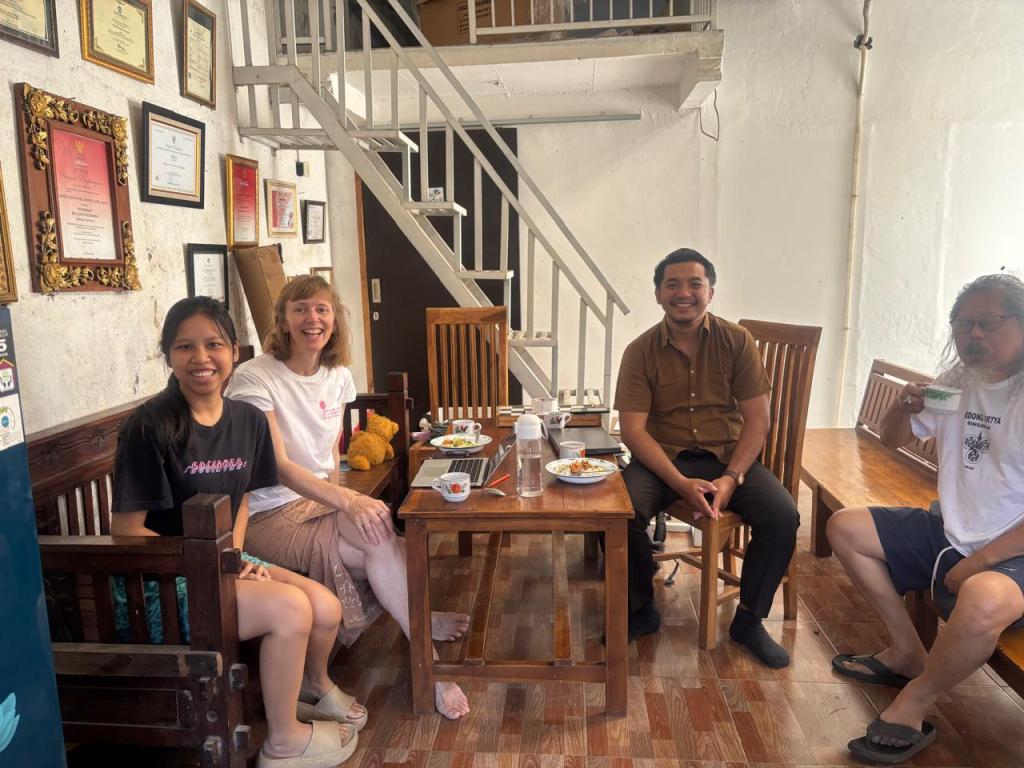
While I am speaking with Juliana, lecturer and writer Sonia Piscayanti translates the conversation. It allows checking how much she still follows the old manuscript. For her self-care moments, she does not seek the perfect date. Not all parts of the lontar are still relevant today.
The second part of the manuscript talks about practices such as polygamy (“madu” in Balinese language) and how a woman needs to be good to her husband, even if he has multiple wives. It describes how wives should follow his (sexual) desire: there is an obligation to follow the husband’s words, just as a girl would follow her parents.
Juliana realized after a long analysis of the Stri Sasana that the prescriptions are less about being a good woman and more about attempts to control a woman. He still sees aspects of that in today’s society, in which patriarchy is strongly rooted.
Small revolutions from within
One of Singaraja Literary Festival’s missions is to gain new perspectives on old texts. The lontar manuscripts are not absolute; the Balinese do not have to follow them 100%. In the old times, lontar was known as a literary text, not as the law. But an older generation now refers to lontar regularly, even though they might not have ever read it. Juliana sees researching the scripts as a gateway to discussing the position of Balinese women. Sonia, who is in her forties, adds, “Our generation needs to read it, research it, and open up the discussion.” The younger generation was not allowed to study the text before, but now it is.
Balinese women carry many burdens and obligations, and in the village, they even face a double burden both domestically and financially. Juliana says that Balinese society has not found a way yet to change the system. It is so strong that it is almost unthinkable to change it, unless through “small revolutions” from within.
One of the reasons why change is difficult is that matriarchs keep supporting the system. Mothers-in-law want their daughter-in-law to obey their son. Sonia recognizes the pressure from her husband’s village. She is asked to visit more often and take her duty as a wife seriously, and it is sometimes hard to explain to them that she has teaching to do at university. It does not matter if women have academic titles. Her husband, Made Adnyana Ole, joins the conversation and explains: “They are not viewed for their skills; they are seen as just women, born to do certain things.”
If it were just for patriarchy, things would be easier, but in Bali, there is a complex mix of paternal structure, religion, and customs. The role of ancestorship is important, not just from an idea that you should do what your grandparents did, but as rooted in religion. In Balinese Hinduism, children follow the lineage and clan of their biological father, and the male members of the family are given higher importance in continuing the ancestral lineage. If the Balinese want to change it, they believe that maybe the family will be cursed.
“It’s not about logic,” as Sonia says. Religion is different from customs, although cultural rules are more highly respected, and religion can be interpreted differently from one village to another. If a woman wants a divorce, she can fight for her children to the highest court, but that court will eventually obey local laws. And so, to change anything, every single person needs to agree, including the ancestors and the gods.
When Sonia wrote an essay in 2017 about the fact that Balinese women are not free, she was cursed online and threatened. And so instead, she created a small revolution:
“I made theater ABOUT it, I did research ABOUT it,” she explains. Addressing these topics through art, metaphorically, leads to seeing things more nuanced than in the past. There has been some change already for Balinese women; some now work as managers in hotels, and Sonia has many female colleagues in university, but as for changing the patriarchal lineage, that is not possible (yet).
Folktales as a tool to reflect
Juliana re-read the Stri Sasana lontar more than 20 times and found new things in it continuously. He is always looking for specific quotes to write down and read again. One that stood out for him is about equality, it is used in traditional Vedic and lontar literature, and goes something like:
“Marriage is the same as taking care of a cow; you need to walk in synchronicity, with the same rhythm, and carry the same amount of burden.”

Sonia’s daughter, Putik, age 18, engages in the discussion and shows me a picture of two oxen pulling a single cart. If one animal pulls harder, walks faster, or refuses to carry the weight, the cart veers off course or flips over. It translates to handling a household together, with the pressure divided between two people, not just carried by one. Stri Sasana teaches that a husband and wife are not independent entities but must move forward together in perfect alignment to maintain balance.
Several Balinese folktales allow people to discuss inequality and responsibility, as a tool to reflect on daily life. Ole and Juliana mention Cupak Gerantang, a tale about two brothers, of which Cupak is the selfish, greedy, and lazy one, and Gerantang is the hardworking and diligent one. One day, when their mother leaves the house and asks them to clean, Gerantang does all the work, and Cupak takes the credit. It is a moral lesson about greed and jealousy versus diligence and good character. According to Sonia, read through a gender lens, this can resonate with the experience of many Balinese women who perform a disproportionate share of domestic and ritual work while receiving less recognition than men.
The men come up with another story, about I Sugih and I Tiwas, the rich and the poor. A poor woman asks a rich relative for food, just one grain of rice. But Sugih says she cannot get it. Tiwas then goes to the forest where she encounters a golden deer, and comes back with a fortune. Now the rich person wants to get gifts from the deer also, and copies what the poor woman did. But instead of gold, she receives poop or insects, and dies from poison. She gets punished for her greed.
Just as Sonia challenges norms through research, writing, and theatre, folktales also address issues that cannot be spoken about directly. The gender equality discussion in Bali is currently one of the biggest topics in Balinese media, Ole says, and old texts might offer new insights into the conversation. According to him, the problem is that Bali glorifies its strict norms, as if they are part of Bali’s identity. Tourists think the culture is amazing, and the colonial legacy has taught how Bali is supposed to be taken care of to preserve the image of a tropical holiday destination. “That thinking comes from the Dutch,” Ole says.
The controlled narrative of Bali
Juliana and Ole mention Ubud — widely considered as the island’s spiritual and cultural heart — as the role model of this identity, where everything is created as a performance. Bali needs to be seen as the reality it is now, not the glorification that the Dutch created. Ole explains how journalists self-censored themselves for a long time, to prevent talking badly about Bali. They would even come up with slogans about how safe it is to live here. The government would get mad about reporting that possibly ruined the image of Bali. If it impacted the stability of Bali as a holiday destination, the permission to broadcast or publish could be taken away. For a long time, under Suharto’s three-decade-long regime (1967-1998), the government controlled the narrative of Bali. When that changed after the Reformasi in 1998, the impact of overtourism became visible. “Journalists gained more freedom to criticize government and business interests and could finally scrutinize mass tourism,” Ole explains.
Stories about Bali — including those in journalism — were for a long time framed in moral terms: the good versus the bad. Relating to the karma idea, when you do something bad, something bad will happen to you. Instead of focusing on structural causes of problems, such as business interests or government policies, the stories emphasized individual behavior and its consequences.
Just like tourism issues became a matter of individual bad actors rather than development errors, gender problems also focus on women doing good or bad things rather than patriarchal structures underneath. As Sonia describes: “A good Balinese woman does not criticize, protest, or even raise her voice. She is someone who maintains harmony and behaves according to accepted norms.”
 CRACKS
Leave a comment